EN
EN 


 Post by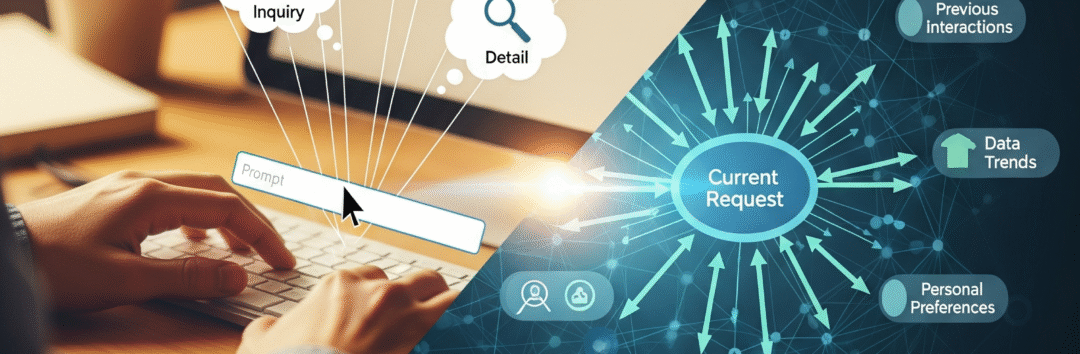
Introduction
Are you struggling to get consistent results from AI tools like ChatGPT, Claude, or Copilot? You’re not alone, mate. Many Aussie businesses and professionals are facing the same challenge – spending hours crafting prompts only to get hit-or-miss results that don’t scale.
Here’s the thing: while everyone’s been focused on “prompt engineering” (basically writing better instructions for AI), there’s a game-changing approach that’s quietly revolutionising how we work with artificial intelligence – context engineering.
Think of it this way: prompt engineering is like giving someone a single instruction and hoping for the best. Context engineering is like setting up an entire workspace with all the tools, references, and background information someone needs to consistently deliver brilliant work.
In this comprehensive guide, we’ll break down exactly what each approach means, when to use them, and how Australian businesses are already leveraging these techniques to save time, cut costs, and achieve better outcomes. Whether you’re a small business owner in Melbourne, a developer in Sydney, or a marketing manager in Brisbane, you’ll walk away with practical strategies you can implement immediately.
1. Understanding the Fundamentals
1.1 What is Prompt Engineering? (The Traditional Approach)
Prompt engineering is the art and science of crafting instructions for AI models to get the best possible outputs. It’s like being a really good communicator who knows exactly how to ask for what they want.
At its core, prompt engineering involves:
- Writing clear, specific instructions
- Providing relevant examples
- Setting the right tone and context
- Structuring requests for optimal responses
For example, instead of asking “Write about marketing,” a prompt engineer would write: “As an experienced digital marketing consultant, write a 500-word blog post about email marketing best practices for Australian small businesses, focusing on compliance with the Spam Act 2003.”
The beauty of prompt engineering lies in its immediacy. You can start improving your AI interactions right now by simply being more specific about what you want.
1.2 What is Context Engineering?
Context engineering takes things to the next level. Instead of crafting individual prompts, you’re building an entire system that automatically provides the AI with everything it needs to perform consistently well.
Think of context engineering as creating a smart assistant that already knows:
- Your business background and industry
- Your preferred writing style and tone
- Your company’s policies and procedures
- Your current projects and objectives
- Your target audience and their needs
The system dynamically assembles this information before any conversation begins, meaning every interaction starts with rich, relevant background context.
A Melbourne accounting firm using context engineering might have their AI assistant automatically know about Australian tax law updates, their client types, compliance requirements, and preferred communication style – without having to explain this in every single prompt.
1.3 Why This Matters for Australian Businesses in 2025
Australian businesses face unique challenges that make this distinction crucial:
Compliance and Regulation: From privacy laws to industry-specific regulations, Aussie businesses need AI that understands local requirements without constant reminders.
Cultural Nuance: Understanding Australian business culture, communication styles, and market conditions isn’t something you want to explain in every prompt.
Competitive Advantage: While your competitors are still manually crafting prompts, context engineering lets you operate at scale with consistent quality.
Cost Efficiency: Reducing the need for lengthy prompts means lower token costs and faster processing times – crucial as AI usage scales across your organisation.
2. The Key Differences Explained Simply
2.1 Scope: Single Request vs Entire System
Prompt Engineering focuses on individual interactions. Each time you need something from AI, you craft a specific prompt. It’s like hiring a contractor for each small job around your house.
Context Engineering builds a comprehensive system. The AI understands your business context automatically. It’s like having a dedicated team member who knows your business inside and out.
2.2 Consistency: Hit-or-Miss vs Repeatable Results
With prompt engineering, results vary based on how well you write each prompt. A busy day might mean rushed prompts and subpar outputs.
Context engineering ensures consistency because the foundational understanding is already built in. Whether it’s Monday morning or Friday afternoon, the quality remains steady.
2.3 Scalability: Manual Tweaks vs Automated Systems
Prompt engineering requires human intervention for each use case. As your needs grow, so does the manual workload.
Context engineering scales automatically. Once set up, it handles increased volume without proportional increases in management overhead.
2.4 Cost Implications: Token Usage and Efficiency
Here’s where it gets interesting for Australian businesses watching their bottom line:
Prompt Engineering often requires lengthy explanations in each request, consuming more tokens and increasing costs per interaction.
Context Engineering front-loads the setup but then operates efficiently, often reducing per-interaction costs by 40-60% compared to detailed prompts.
3. Prompt Engineering Deep Dive
3.1 Core Principles and Best Practices
The foundation of effective prompt engineering rests on five key principles:
Clarity Over Cleverness: Write prompts like you’re explaining something to a capable colleague, not showing off your vocabulary. Australian businesses particularly benefit from straightforward communication.
Context First: Always provide background before making requests. Instead of “Write a proposal,” try “You’re helping a Brisbane-based construction company pitch for a government infrastructure project.”
Examples Work Wonders: Show the AI what good looks like. If you want a specific format, provide a sample.
Progressive Refinement: Start with a basic prompt and iteratively improve based on outputs. This is particularly effective for ongoing business processes.
Feedback Integration: Use the AI’s responses to refine your approach. What worked? What didn’t? Build this learning into your next prompts.
3.2 Common Techniques (Chain-of-Thought, Few-Shot, Zero-Shot)
Chain-of-Thought Prompting encourages the AI to show its working, leading to more accurate results for complex tasks. For example: “Calculate the GST implications of this transaction, showing each step of your reasoning.”
Few-Shot Prompting provides several examples before asking for the task. Perfect for Australian businesses needing consistent formatting: “Here are three examples of how we write client reports… Now write one for this new client.”
Zero-Shot Prompting relies on the AI’s training without examples. Useful for novel situations: “Draft a response to this unique customer complaint using Australian consumer law principles.”
3.3 Australian Use Cases and Examples
Legal Services: A Sydney law firm uses chain-of-thought prompting for contract analysis: “Review this commercial lease agreement for a Melbourne retail space, identifying potential issues under Australian tenancy law. Show your reasoning for each concern.”
Healthcare: A Perth medical practice uses few-shot prompting for patient communication: “Here are three examples of how we explain treatment plans to patients… Now explain this procedure in similar terms.”
Tourism: A Queensland tour operator uses zero-shot prompting for seasonal content: “Create social media posts promoting winter activities in the Whitsundays, emphasizing what makes this season special.”
3.4 Tools and Frameworks for Prompt Engineering
PromptBase: A marketplace for tested prompts, with growing Australian content.
Prompt Perfect: Helps optimize prompts for different AI models, useful for businesses using multiple platforms.
LangChain: More technical but powerful for businesses building custom prompt workflows.
Custom Templates: Many Australian businesses find success creating their own prompt libraries for common tasks.
3.5 Limitations and Challenges
Prompt engineering faces several key limitations:
Human Bottleneck: Every interaction requires thoughtful prompt crafting, limiting scalability.
Inconsistency: Different team members write different prompts, leading to variable quality.
Context Loss: Each conversation starts fresh, losing valuable business context.
Training Overhead: Teaching team members to write effective prompts takes time and resources.
Token Inefficiency: Detailed prompts can be expensive at scale.
4. Context Engineering Mastery
4.1 The Dynamic Context Assembly Process
Context engineering works like a smart librarian who automatically gathers relevant information before helping you. The system assesses what you’re trying to achieve and assembles the right background knowledge, examples, and constraints.
Here’s how it works in practice:
Information Gathering: The system maintains databases of your business knowledge, previous interactions, and relevant external information.
Relevance Assessment: When you make a request, the system determines which context elements are most relevant.
Dynamic Assembly: Context is assembled in real-time, creating a rich foundation for the AI’s response.
Continuous Learning: The system learns from successful interactions, improving context selection over time.
4.2 Memory Management and Conversation History
Unlike traditional prompting, context engineering maintains sophisticated memory across interactions:
Short-term Memory: Tracks conversation flow and immediate context within sessions.
Medium-term Memory: Remembers project-specific information and preferences across related conversations.
Long-term Memory: Maintains organizational knowledge, policies, and learned preferences.
A Brisbane marketing agency using context engineering might have their AI remember client preferences, campaign performance data, and industry trends across months of interactions.
4.3 System Prompts vs User Prompts
System Prompts establish the foundational context and behavior parameters. These run behind the scenes, setting up the AI’s role, knowledge base, and operational constraints.
User Prompts become much simpler, focusing on specific requests rather than context-setting.
For example, a system prompt might establish: “You are an expert in Australian employment law, familiar with Fair Work Act requirements, and experienced in advising small businesses in Victoria.”
The user prompt can then simply be: “Help me handle this performance review situation.”
4.4 Tool Integration and External Data Sources
Context engineering shines when integrated with business systems:
CRM Integration: Customer history and preferences automatically inform AI interactions.
Document Libraries: Policies, procedures, and knowledge bases become accessible context.
Real-time Data: Current market conditions, regulatory updates, and business metrics inform responses.
API Connections: Live data from business systems enhances context accuracy.
4.5 Real-World Australian Implementation Examples
Melbourne Tech Startup: Implemented context engineering for customer support, reducing response time by 70% while improving satisfaction scores. The system automatically knows product details, customer history, and company policies.
Sydney Professional Services: A consulting firm uses context engineering for proposal writing. The system understands their methodology, past projects, and client industries, producing consistently high-quality initial drafts.
Perth Mining Company: Uses context engineering for safety compliance documentation. The system maintains current Australian safety regulations, company procedures, and incident histories.
5. When to Use Each Approach: Decision Framework
5.1 Prompt Engineering Scenarios
Prompt engineering works best for:
One-off Tasks: Unique requests that don’t require ongoing consistency.
Simple Operations: Straightforward tasks where the context is easy to explain in a single prompt.
Experimental Phase: When you’re still figuring out what you need and want flexibility to change approaches quickly.
Small Scale Operations: Businesses with limited AI usage where setup overhead isn’t justified.
Budget Constraints: When upfront investment in context engineering isn’t feasible.
5.2 Context Engineering Scenarios
Context engineering becomes essential for:
Repetitive Tasks: Any workflow that happens regularly and requires consistency.
Complex Business Logic: When your industry or business has intricate rules and procedures.
Team Operations: Multiple people need to achieve consistent results from AI interactions.
Customer-Facing Applications: When consistency and brand voice are critical.
Regulatory Compliance: Industries where adherence to rules and standards is non-negotiable.
5.3 Hybrid Approaches: Getting the Best of Both Worlds
Many Australian businesses find success combining both approaches:
Foundation + Flexibility: Use context engineering for base knowledge and prompt engineering for specific variations.
Staged Implementation: Start with prompt engineering to understand needs, then gradually implement context engineering for high-value use cases.
Role-Based Systems: Context engineering for standardized roles, prompt engineering for unique situations.
5.4 Cost-Benefit Analysis for Australian SMEs
Initial Investment: Context engineering requires upfront setup time and potentially technical resources.
Ongoing Costs: Prompt engineering has higher per-interaction costs but lower setup investment.
Break-even Point: Most businesses reach cost parity within 3-6 months of regular usage.
Quality Improvements: Context engineering typically delivers 40-60% better consistency in outputs.
Time Savings: Teams report a 50-70% reduction in time spent crafting prompts after context engineering implementation.
6. Practical Implementation Guide
6.1 Getting Started with Prompt Engineering
Week 1: Assessment and Planning
- Audit your current AI usage
- Identify common tasks and pain points
- Document your most frequent prompt types
Week 2: Template Development
- Create templates for your top 5 most common prompts
- Test and refine these templates
- Train your team on a consistent prompt structure
Week 3: Implementation and Feedback
- Roll out templates across your team
- Collect feedback and results
- Iterate based on real-world usage
Week 4: Optimization and Scale
- Refine successful templates
- Identify new opportunities
- Plan for advanced techniques
6.2 Building Your First Context Engineering System
Phase 1: Knowledge Audit (2-3 weeks) Catalog your business knowledge:
- Company policies and procedures
- Industry-specific information
- Customer personas and preferences
- Historically successful outputs
- Brand voice and style guidelines
Phase 2: System Design (1-2 weeks) Map out your context architecture:
- Information hierarchy and relevance
- Dynamic context selection rules
- Integration points with existing systems
- User role definitions and permissions
Phase 3: Implementation (3-4 weeks) Build your context system:
- Set up knowledge databases
- Create context assembly logic
- Integrate with business systems
- Develop user interfaces
Phase 4: Testing and Refinement (2-3 weeks). Validate and optimize:
- Test with real business scenarios
- Gather team feedback
- Refine context selection algorithms
- Optimize for performance and cost
6.3 Common Pitfalls and How to Avoid Them
Over-Engineering: Don’t try to solve every problem at once. Start simple and build complexity gradually.
Neglecting User Training: Even the best system fails without proper user education and adoption.
Ignoring Maintenance: Context systems require ongoing updates as business needs evolve.
Poor Integration: Failing to connect with existing business systems limits effectiveness.
Insufficient Testing: Thorough testing prevents costly mistakes and ensures reliability.
6.4 Measuring Success: KPIs and Metrics
Quality Metrics:
- Output consistency scores
- User satisfaction ratings
- Error rate reduction
- Time-to-acceptable-result
Efficiency Metrics:
- Prompt crafting time reduction
- Total interaction time
- Token usage optimization
- Cost per successful interaction
Business Impact Metrics:
- Task completion rate improvement
- Team productivity gains
- Customer satisfaction improvements
- Revenue impact from AI-enhanced processes
7. Industry-Specific Applications
7.1 E-commerce and Retail
Prompt Engineering Applications:
- Product description writing for unique items
- Customer service response templates
- Seasonal marketing campaign development
Context Engineering Applications:
- Personalized customer interaction systems
- Inventory-aware product recommendations
- Dynamic pricing explanation generators
Australian Example: Surfboard retailer in Byron Bay uses context engineering to maintain product knowledge, customer preferences, and local surfing conditions for personalized recommendations.
7.2 Professional Services (Legal, Accounting, Consulting)
Prompt Engineering Applications:
- Document drafting for unique client situations
- Research assistance for novel legal questions
- Initial client consultation summaries
Context Engineering Applications:
- Automated compliance checking systems
- Client history-aware advice generation
- Consistent report formatting across teams
Australian Example: Adelaide accounting firm implements context engineering with Australian tax code updates, client business types, and preferred communication styles built into every interaction.
7.3 Education and Training
Prompt Engineering Applications:
- Lesson plan creation for specific topics
- Student feedback personalization
- Assessment question generation
Context Engineering Applications:
- Adaptive learning systems
- Student progress-aware tutoring
- Curriculum-aligned content generation
Australian Example: Vocational training provider in Darwin uses context engineering to ensure all AI-generated content aligns with Australian Qualifications Framework requirements.
7.4 Healthcare and Medical
Prompt Engineering Applications:
- Patient education material creation
- Research literature summarization
- Administrative documentation assistance
Context Engineering Applications:
- Patient history-aware communication
- Protocol-compliant documentation
- Personalized treatment explanation systems
Australian Example: Rural medical practice in Tamworth uses context engineering to maintain patient communication preferences, medical histories, and Australian health guideline compliance.
7.5 Government and Public Sector
Prompt Engineering Applications:
- Public communication drafting
- Policy analysis assistance
- Community feedback summarization
Context Engineering Applications:
- Citizen service automation
- Regulation-compliant response systems
- Multi-language service provision
Australian Example: Local council in Geelong implements context engineering for development application processing, incorporating zoning laws, environmental requirements, and community feedback patterns.
8. Tools and Platforms Comparison
8.1 Prompt Engineering Tools
PromptBase (−- −$)
- Marketplace for tested prompts
- Growing Australian business content
- Good for beginners and specific use cases
Prompt Perfect ($$)
- Optimization across multiple AI models
- Analytics and performance tracking
- Suitable for medium businesses
Custom Solutions ($$$)
- Tailored to specific business needs
- Full control and customization
- Best for enterprises with specific requirements
8.2 Context Engineering Platforms
LangChain (Open Source + Development Costs)
- Highly customizable
- Strong community support
- Requires technical expertise
Microsoft Semantic Kernel ($$-$$$)
- Enterprise-grade reliability
- Good Azure integration
- Strong for Microsoft-centric organizations
Custom Development ($$$-$$$$)
- Maximum flexibility and control
- Requires significant technical investment
- Best ROI for large-scale implementations
8.3 Australian Vendor Landscape
Several Australian companies are emerging as specialists in AI implementation:
Local Consulting Firms: Offer implementation services with an understanding of Australian business culture and regulations.
Technology Partners: Provide ongoing support and maintenance for AI systems.
Training Providers: Offer education and certification in prompt and context engineering.
8.4 Pricing and ROI Considerations
Setup Costs:
- Prompt Engineering: $500-$5,000 (mostly time and training)
- Context Engineering: $5,000-$50,000 (depending on complexity)
Ongoing Costs:
- Prompt Engineering: Higher per-interaction costs
- Context Engineering: Lower operational costs after setup
Break-even Analysis:
- Light usage (< 100 interactions/month): Prompt engineering is typically more cost-effective
- Medium usage (100-1,000 interactions/month): Context engineering breaks even in 3-6 months
- Heavy usage (> 1,000 interactions/month): Context engineering typically breaks even in 1-3 months
9. Advanced Techniques and Best Practices
9.1 Multi-Turn Conversation Management
Advanced context engineering maintains sophisticated conversation memory:
Context Preservation: Important information persists across conversation boundaries.
Relationship Mapping: Understanding connections between different conversation threads.
Priority Management: Ensuring critical context takes precedence when memory limits are reached.
Australian Application: A Melbourne law firm’s context system remembers client preferences, case details, and communication history across months of interactions, ensuring continuity even when different team members handle conversations.
9.2 Dynamic Context Windows Optimization
Managing context efficiently becomes crucial for cost and performance:
Relevance Scoring: Automatically prioritizing the most important context elements.
Compression Techniques: Summarizing less critical information to save tokens.
Hierarchical Context: Organizing information by importance and specificity.
Performance Monitoring: Tracking context effectiveness and adjusting algorithms accordingly.
9.3 Retrieval Augmented Generation (RAG) Integration
RAG combines pre-trained AI models with dynamic information retrieval:
Document Integration: Connecting AI to your business document libraries.
Real-time Updates: Incorporating current information without retraining models.
Source Attribution: Tracking where information comes from for verification.
Permission Management: Ensuring AI only accesses appropriate information based on user roles.
9.4 Custom Model Fine-Tuning Considerations
For organizations with highly specific needs:
Cost-Benefit Analysis: Fine-tuning requires significant investment but can deliver superior performance for specialized tasks.
Data Requirements: Need substantial, high-quality training data specific to your use case.
Maintenance Overhead: Custom models require ongoing management and updates.
Regulatory Compliance: Ensuring fine-tuned models meet Australian privacy and security requirements.
10. Future Trends and Career Implications
10.1 The Evolution from Prompt to Context Engineering
The industry is clearly moving toward more sophisticated context management:
Automation Trends: Manual prompt crafting is increasingly automated through context systems.
Integration Deepening: Context engineering is becoming integrated with core business systems rather than standing alone.
Intelligence Advancement: AI systems are becoming better at understanding implicit context without explicit instruction.
10.2 Job Market Trends in Australia
Growing Demand: Australian businesses are rapidly hiring AI implementation specialists, with particular demand in Sydney, Melbourne, and Brisbane.
Skill Premiums: Professionals with context engineering skills command 20-40% higher salaries than traditional prompt engineers.
Industry Hotspots: Financial services, healthcare, and government sectors are leading adoption.
Regional Opportunities: Remote work enabling AI specialists to serve businesses across Australia from any location.
10.3 Skills Development Pathway
Foundation Level: Understanding AI capabilities and basic prompt crafting
- Timeline: 2-4 weeks
- Investment: $500-$1,000 in courses and practice
- Outcome: Can improve basic AI interactions
Intermediate Level: Systematic prompt engineering and basic context management
- Timeline: 2-3 months
- Investment: $2,000-$5,000 in training and tools
- Outcome: Can implement prompt systems for teams
Advanced Level: Full context engineering and system integration
- Timeline: 6-12 months
- Investment: $10,000-$20,000 in education and certification
- Outcome: Can design and implement enterprise AI systems
Expert Level: Custom development and strategic AI implementation
- Timeline: 1-2 years ongoing development
- Investment: Ongoing professional development
- Outcome: Can lead to organizational AI transformation
10.4 What’s Next: Predictions for 2025-2030
Ubiquitous Context: Every business application will include context-aware AI assistance by 2027.
Australian Specialization: Local companies will develop specialized context systems for Australian regulations and business practices.
Privacy Evolution: New frameworks for managing business context while maintaining privacy compliance.
Integration Standards: Industry standards will emerge for context system interoperability.
Skills Transformation: Traditional roles will evolve to include AI collaboration as a core competency.
11. Troubleshooting and Common Issues
11.1 Performance Optimization Tips
Context Bloat: Regularly audit and prune context databases to maintain relevance and performance.
Response Latency: Optimize context retrieval algorithms to balance comprehensiveness with speed.
Cost Management: Monitor token usage patterns and optimize context selection for cost efficiency.
Quality Drift: Implement monitoring systems to detect when context systems start producing lower-quality outputs.
11.2 Debugging Context Assembly Problems
Information Gaps: Identify when context systems lack necessary information and systematically fill gaps.
Conflicting Context: Resolve situations where different context sources provide contradictory information.
Relevance Issues: Fine-tune context selection algorithms when irrelevant information interferes with outputs.
Integration Failures: Troubleshoot connection issues with business systems and data sources.
11.3 Handling Edge Cases and Exceptions
Novel Situations: Develop fallback strategies when context systems encounter unprecedented scenarios.
System Limitations: Plan for graceful degradation when context systems reach capacity or capability limits.
User Error: Design systems that guide users toward successful interactions, even when initial requests are unclear.
Regulatory Changes: Implement processes for rapidly updating context systems when Australian regulations change.
11.4 Scaling Challenges and Solutions
User Onboarding: Develop efficient training programs as more team members use AI systems.
Context Maintenance: Establish processes for keeping context systems current as businesses evolve.
Performance Under Load: Design systems that maintain quality and speed as usage increases.
Multi-Location Coordination: Ensure consistency across different business locations and time zones.
12. Case Studies: Australian Success Stories
12.1 Small Business Transformation (Melbourne Café Chain)
Background: Five-location café chain struggling with inconsistent customer service and marketing messaging.
Challenge: Each location had different approaches to customer communication, social media, and staff training, leading to brand inconsistency.
Solution: Implemented context engineering system with:
- Brand voice and messaging guidelines
- Local location information and specialties
- Customer preference data from loyalty programs
- Seasonal menu and promotion information
Results:
- 60% improvement in customer satisfaction scores
- 40% reduction in time spent on marketing content creation
- 25% increase in social media engagement
- Consistent brand experience across all locations
Key Lesson: Even small businesses can benefit significantly from context engineering when consistency and brand management are priorities.
12.2 Enterprise Implementation (Sydney FinTech)
Background: A growing financial technology company needing to scale customer support without proportional staff increases.
Challenge: Complex financial products requiring detailed, accurate, and compliant customer communications at scale.
Solution: Built a comprehensive context engineering system, including:
- Australian financial regulations and compliance requirements
- Product knowledge base with real-time updates
- Customer history and interaction patterns
- Risk assessment and approval workflows
Results:
- 70% reduction in customer support response times
- 90% accuracy rate for compliance-related communications
- 300% increase in customer support capacity with the same staff size
- 45% improvement in customer satisfaction scores
Key Lesson: Context engineering enables dramatic scaling in complex, regulated industries where accuracy and compliance are critical.
12.3 Government Efficiency Project (Queensland Transport)
Background: The State transport department needs to improve citizen service delivery and information accessibility.
Challenge: Citizens struggling to navigate complex transport regulations, licensing requirements, and service options.
Solution: Developed context-aware citizen service system with:
- Complete Queensland transport law and regulation database
- Service location and availability information
- Multi-language support for diverse communities
- Integration with existing government systems
Results:
- 50% reduction in average call resolution time
- 35% decrease in repeat inquiries
- 80% citizen satisfaction rate with automated services
- Significant cost savings in staff time and resources
Key Lesson: Context engineering can transform government service delivery by making complex information accessible and actionable for citizens.
12.4 Education Sector Innovation (Perth University)
Background: Large university looking to personalize student support and improve educational outcomes.
Challenge: Diverse student body with varying backgrounds, learning styles, and support needs requiring personalized assistance at scale.
Solution: Implemented context engineering for student services, including:
- Individual student academic history and performance patterns
- Course requirements and prerequisite information
- Support service availability and student preferences
- Integration with learning management systems
Results:
- 40% improvement in student engagement with support services
- 25% increase in course completion rates
- 60% reduction in administrative workload for student services
- Enhanced early intervention for at-risk students
Key Lesson: Context engineering enables personalized education support at scale, improving outcomes while reducing administrative burden.
13. Getting Started: Your Next Steps
13.1 Quick Start Checklist
Week 1: Assessment □ Audit current AI usage across your team □ Identify top 5 repetitive tasks involving AI □ Document current prompt-writing practices □ Calculate time spent on AI-related tasks weekly
Week 2: Planning □ Choose 1-2 high-impact use cases for improvement □ Decide between prompt engineering or context engineering approach □ Set budget and timeline expectations □ Identify team members for training and implementation
Week 3: Initial Implementation □ For prompt engineering: Create first template library □ For context engineering: Begin knowledge audit □ Start team training on chosen approach □ Set up measurement and feedback systems
Week 4: Optimization □ Gather feedback from initial implementations □ Refine templates or context systems based on results □ Plan next phase of rollout □ Document lessons learned and best practices
13.2 Resource Library and Templates
Prompt Engineering Templates:
- Business communication prompts
- Content creation frameworks
- Analysis and reporting templates
- Customer service response guides
Context Engineering Blueprints:
- Knowledge audit frameworks
- System design templates
- Implementation checklists
- Performance monitoring tools
Australian-Specific Resources:
- Regulatory compliance checklists
- Local business culture guidelines
- Industry-specific prompt libraries
- Regional vendor and service directories
13.3 Community and Support Networks
Professional Networks:
- Australian AI in Business meetups (Sydney, Melbourne, Brisbane)
- Industry-specific AI implementation groups
- Online communities for prompt and context engineering
Training and Development:
- University continuing education programs
- Professional certification courses
- Vendor-specific training programs
- Peer mentorship opportunities
Ongoing Support:
- Consultant networks for implementation assistance
- Technology partner ecosystems
- User groups for specific tools and platforms
- Regular industry conferences and workshops
13.4 Certification and Training Opportunities
Foundation Certifications:
- AI Literacy for Business Professionals
- Basic Prompt Engineering Certification
- Understanding Large Language Models
Intermediate Certifications:
- Advanced Prompt Engineering
- Context System Design
- AI Integration for Business Systems
Advanced Certifications:
- Enterprise AI Strategy
- Custom Context Engineering
- AI Governance and Compliance
Australian-Specific Programs:
- Compliance and Regulatory AI Implementation
- Local Business Culture and AI
- Regional Industry Specializations
14. Conclusion and Key Takeaways
14.1 Summary of Key Differences
The choice between prompt engineering and context engineering isn’t just about technology – it’s about how you want to scale your business’s relationship with AI.
Prompt Engineering excels when you need:
- Flexibility and experimentation
- Quick starts with minimal investment
- Unique, one-off tasks
- Small-scale operations
Context Engineering becomes essential when you want:
- Consistency and reliability at scale
- Reduced ongoing management overhead
- Complex business logic integration
- Professional, customer-facing AI interactions
14.2 Recommended Approach by Business Size
Small Businesses (1-20 employees): Start with prompt engineering to understand your needs, then implement context engineering for your highest-value, most repetitive tasks.
Medium Businesses (20-200 employees): Hybrid approach – use context engineering for core business processes and prompt engineering for experimental or unique tasks.
Large Enterprises (200+ employees): Systematic context engineering implementation across departments, with prompt engineering for specialized or novel use cases.
14.3 Action Plan Template
Month 1: Assessment and Planning
- Complete skills and needs audit
- Choose initial focus areas
- Set up measurement systems
Month 2-3: Initial Implementation
- Deploy the chosen approach for pilot projects
- Train core team members
- Gather feedback and refine
Month 4-6: Scale and Optimize
- Expand successful implementations
- Add complexity and sophistication
- Plan next-phase enhancements
Month 7-12: Advanced Implementation
- Integrate with core business systems
- Develop specialized applications
- Build internal expertise and capabilities
14.4 Final Thoughts on the Future of AI Interaction
The evolution from prompt engineering to context engineering represents more than just a technical advancement – it’s a fundamental shift in how businesses can leverage artificial intelligence for competitive advantage.
Australian businesses that embrace this shift early will find themselves with significant advantages: more consistent AI outputs, reduced operational overhead, better customer experiences, and the ability to scale AI applications across their organizations effectively.
The question isn’t whether your business will eventually use sophisticated AI systems – it’s whether you’ll be an early adopter, gaining competitive advantages, or a late adopter playing catch-up.
Context engineering, in particular, represents the future of business AI interaction. As these systems become more sophisticated and accessible, they’ll become as essential to business operations as email, websites, and customer management systems are today.
The time to start your AI transformation journey is now. Whether you begin with prompt engineering or jump straight to context engineering, the most important step is getting started. Your future competitive position may well depend on the AI capabilities you build today.
Remember, this isn’t just about technology – it’s about empowering your team to work more effectively, serve customers better, and build a more successful business. The tools are available, the knowledge is accessible, and the opportunity is significant.
The question now is: what will you build with it?